
Woodworm is one of the most common causes of timber damage in UK properties, yet it’s also one of the most frequently misunderstood.
Many homeowners discover the tell-tale exit holes in their floorboards or roof timbers and assume the worst, but the reality is that not all woodworm infestations are active, and not all timbers that show signs of past attack require treatment. The key is getting an accurate survey from a qualified specialist who can tell you whether the infestation is current, how extensive it is, and what, if anything, needs to be done about it. That’s exactly what we do.
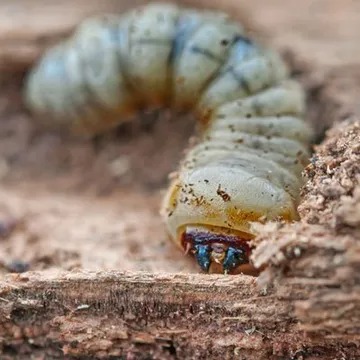
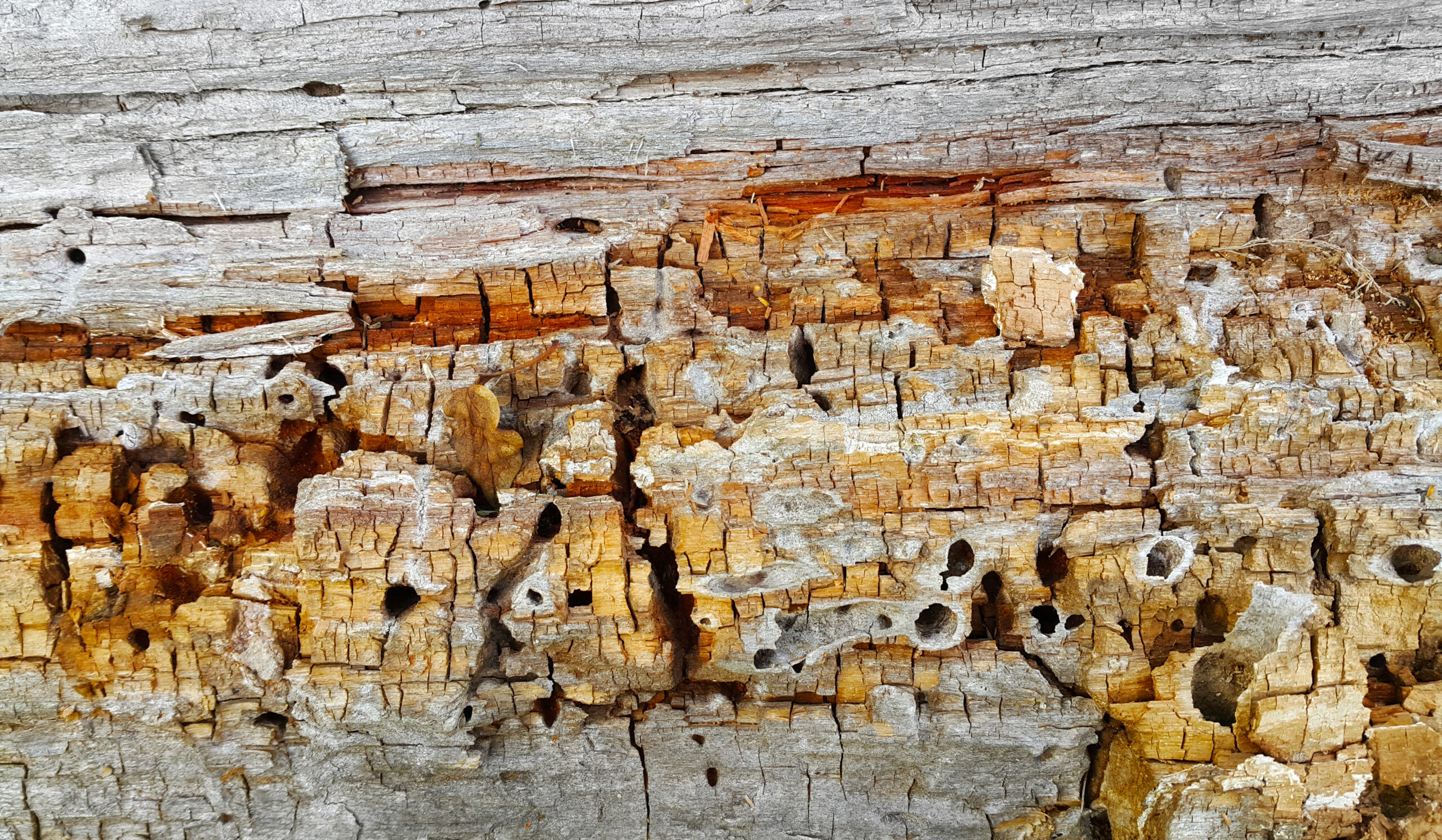
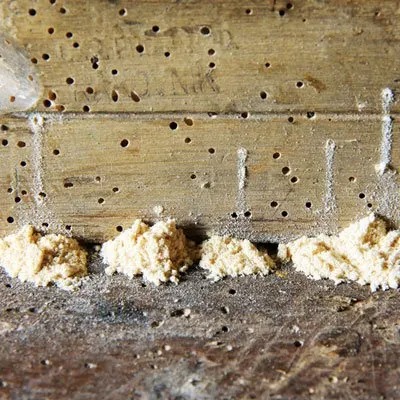
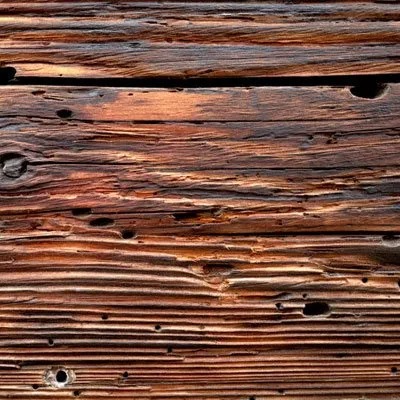
‘Woodworm’ is not a single species — it’s a collective term for the larval stage of several wood-boring beetle species that feed on and tunnel through timber. The damage you see (the exit holes, the fine powdery dust known as frass) is caused by the larvae as they feed through the wood over a period of years, and by the adult beetles as they bore their way out to mate and lay eggs on new timber surfaces.
The lifecycle of a wood-boring beetle follows four stages: egg, larva, pupa, and adult. The larvae spend the vast majority of their lives — typically between two and five years, depending on species and conditions — feeding inside the timber. The exit holes that most people associate with woodworm only appear when the adult beetle emerges, usually between May and September. This means that by the time you spot the holes, the infestation may have been active for several years already.
Several different beetle species are responsible for woodworm damage in Welsh and UK properties. Identifying the species correctly matters, because different beetles attack different timber types and require different treatment approaches.
Common Furniture Beetle
By far the most frequently encountered wood-boring beetle in UK homes. The common furniture beetle attacks both softwood and hardwood, preferring the sapwood portions of timber — the outer layers just beneath the bark. It’s responsible for the majority of woodworm infestations found in roof timbers, floorboards, joists, staircases, and old furniture. Exit holes are small and round, approximately 1–2mm in diameter, and fresh frass has a gritty, lemon-pip texture. Adult beetles are small, brown, and oval-shaped, typically 2.5–5mm in length.
House Longhorn Beetle
The house longhorn beetle is significantly more destructive than the common furniture beetle, capable of completely hollowing out structural softwood timbers while leaving the surface apparently intact. Fortunately, in the UK it is largely restricted to certain areas of Surrey and southern England, it is rarely encountered in Wales. However, it’s worth being aware of, particularly in properties with timber sourced from Europe where it is more prevalent. Exit holes are oval rather than round, and considerably larger — 6–10mm across.
Deathwatch Beetle
The deathwatch beetle is a serious pest of old hardwood timbers, oak, elm, and chestnut in particular and is most commonly found in ancient buildings, churches, and period properties with original structural hardwood. It’s associated with timber that has already been partially softened by fungal decay, making damp conditions a significant risk factor. Exit holes are larger than those of the common furniture beetle, approximately 3mm in diameter, and the frass has a disc-like or bun-shaped texture. Cardiff and the Vale have a number of older and listed properties where deathwatch beetle can be a genuine concern.
Bark Borer Beetle
The bark borer attacks timber that still retains its bark — most commonly found in rough-sawn roof timbers where bark has been left on the wood during processing. Infestation is usually limited to the bark and immediately adjacent sapwood, and the structural timber beneath is typically unaffected. Treatment may not be required if the bark is removed.
The presence of exit holes alone doesn’t confirm an active infestation — old holes from a long-dead population are very common, particularly in older properties. Our surveyors look for specific indicators of current activity:
Woodworm can attack any accessible untreated timber, but certain areas and property types are particularly vulnerable. In Cardiff and the Vale of Glamorgan, we regularly encounter infestations in:
Not every property with woodworm exit holes requires treatment — but identifying whether treatment is needed, and applying the right product to the right timber, requires experience and qualification. Our approach follows PCA best practice guidelines throughout:
Woodworm is one of the most frequently flagged issues in RICS homebuyer survey reports and mortgage valuations across Cardiff and the Vale. If you’re buying a property and a timber survey has flagged a suspected woodworm infestation, or if you’re selling and want to resolve an issue before it becomes a sticking point, we can carry out an independent specialist survey and issue a report and treatment guarantee that satisfies solicitors, mortgage lenders, and prospective buyers.
Many woodworm issues flagged in general property surveys are historic rather than active and a specialist survey from a PCA qualified expert can often resolve the concern quickly and cost-effectively, without the need for extensive treatment.
The bulk of our work comes from recommendations from satisfied customers.
We care about or reputation, which is why we offer such a good guarantee
There’s no shortage of contractors offering remedial timber treatments in Cardiff but not all of them are qualified, and not all of them will give you an honest assessment. Here’s why our customers keep recommending us:
Above all else, get a survey before you do anything, know what you are dealing with and plan for it.
We will always do our best to do what’s best for you.
A lot of woodworm exit holes are old the infestation is long gone and no treatment is necessary. We’ll tell you that honestly. Our PCA qualified surveyors carry out a thorough inspection to determine whether an infestation is active before recommending any course of action. You’ll never be sold treatment you don’t need.
When treatment is needed, we use industry-approved insecticidal preservative products from Sovereign Chemicals and Wykamol applied by our qualified technicians to the full extent Honest Assessment We Won’t Treat What Doesn’t Need Treating of the affected and at-risk timber. All treatment work is guaranteed, giving you and any future buyers or lenders the confidence of a written warranty.
We carry out woodworm surveys and treatments across Cardiff and the Vale of Glamorgan — from loft timbers in Roath and Cathays to structural hardwoods in period properties in Llandaff, Pontcanna, Cowbridge, and Penarth. Whether you’ve spotted exit holes during a renovation, received a flag in a homebuyer’s survey, or are simply concerned about the condition of the timber in your loft, give us a call. We’ll carry out a proper assessment and give you a straight, honest answer about what — if anything — needs to be done.
Whether you’ve found exit holes in your floorboards, had woodworm flagged in a survey report, or are concerned about the timber in your loft, we’re here to help.
Call us today and speak directly with one of our PCA qualified specialists no call centres, no pushy sales approach.
We’ll give you an honest assessment of what you’re dealing with and let you know exactly what needs to be done.